How The Burgeon Project could be funded
Built in layers, not one grand ask
No single stream should carry the whole vision. The strongest model diversifies across founder-led businesses, donations, grants, housing capital, resident revenue, and community enterprise.
Master prospectus
The Burgeon Project — Master Prospectus
Working document, subject to change.
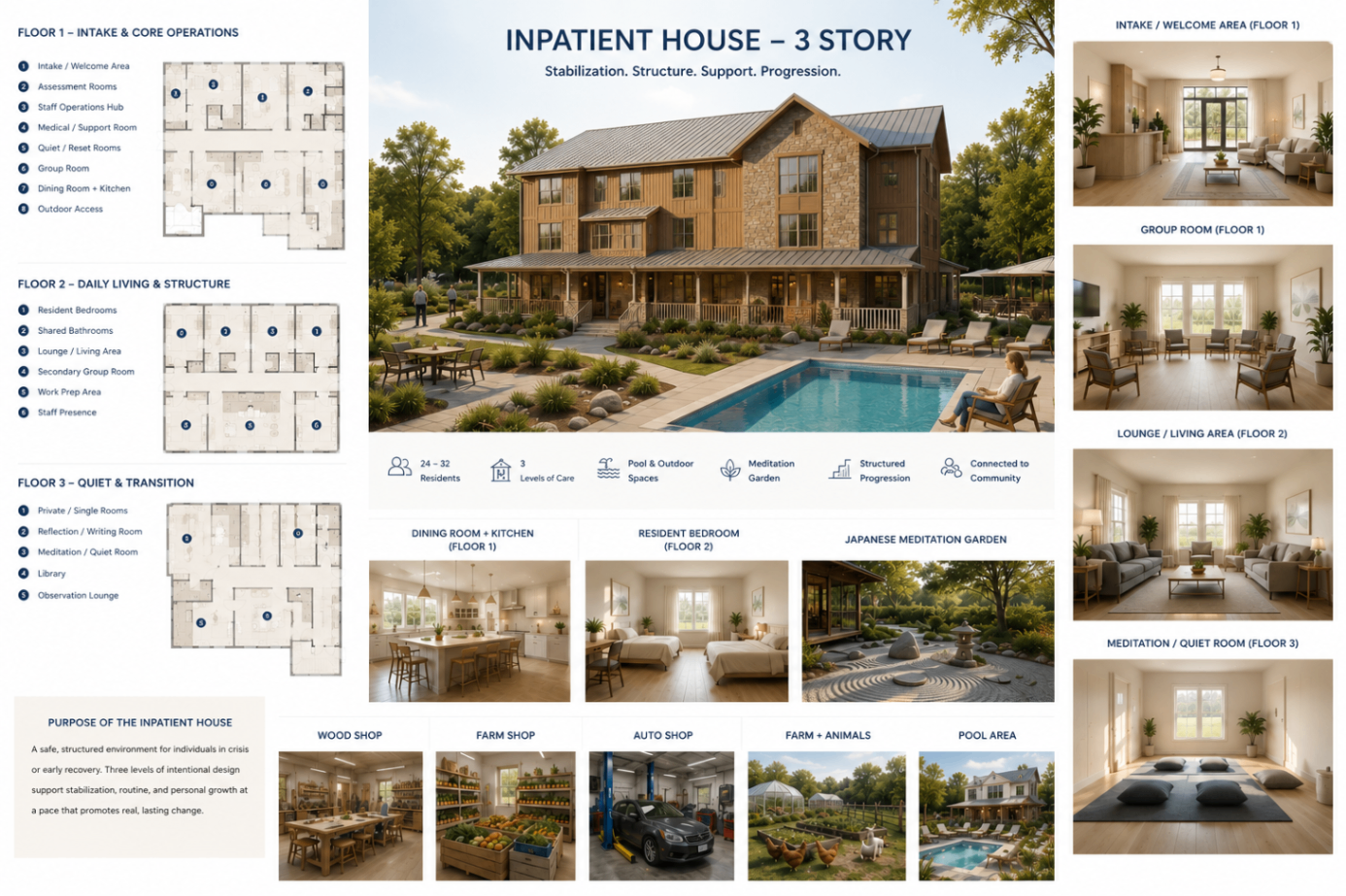
Concept detail — Main core: intensive restoration
Founder-led businesses
Loving the Spectrum, The UGC Exchange, and other mission-aligned ventures build early revenue — research, legal planning, and public education — without financing the whole community alone.
Donations
Fund what service fees can't: scholarships, emergency assistance, family support, and startup costs. The goal is a broad base of recurring donors, not one benefactor.
Grants
Fund defined, measurable programs — peer support, vocational training, addiction recovery, homelessness prevention — treated as restricted project funding, not guaranteed income.
Housing capital
Land, homes, and community buildings funded through capital campaigns, major gifts, low-interest loans, housing grants, and program-related investments.
Resident revenue
Rent, program fees, disability income, and wages support ongoing operations — with donations and scholarships closing the gap for those who can't afford full cost.
Community enterprises
Woodworking, agriculture, automotive services, and digital work create employment and purpose while generating income — never built on unpaid resident labor.
The mission is belonging. The funding model is diversification. The discipline is never letting one unstable revenue source decide whether the community survives.
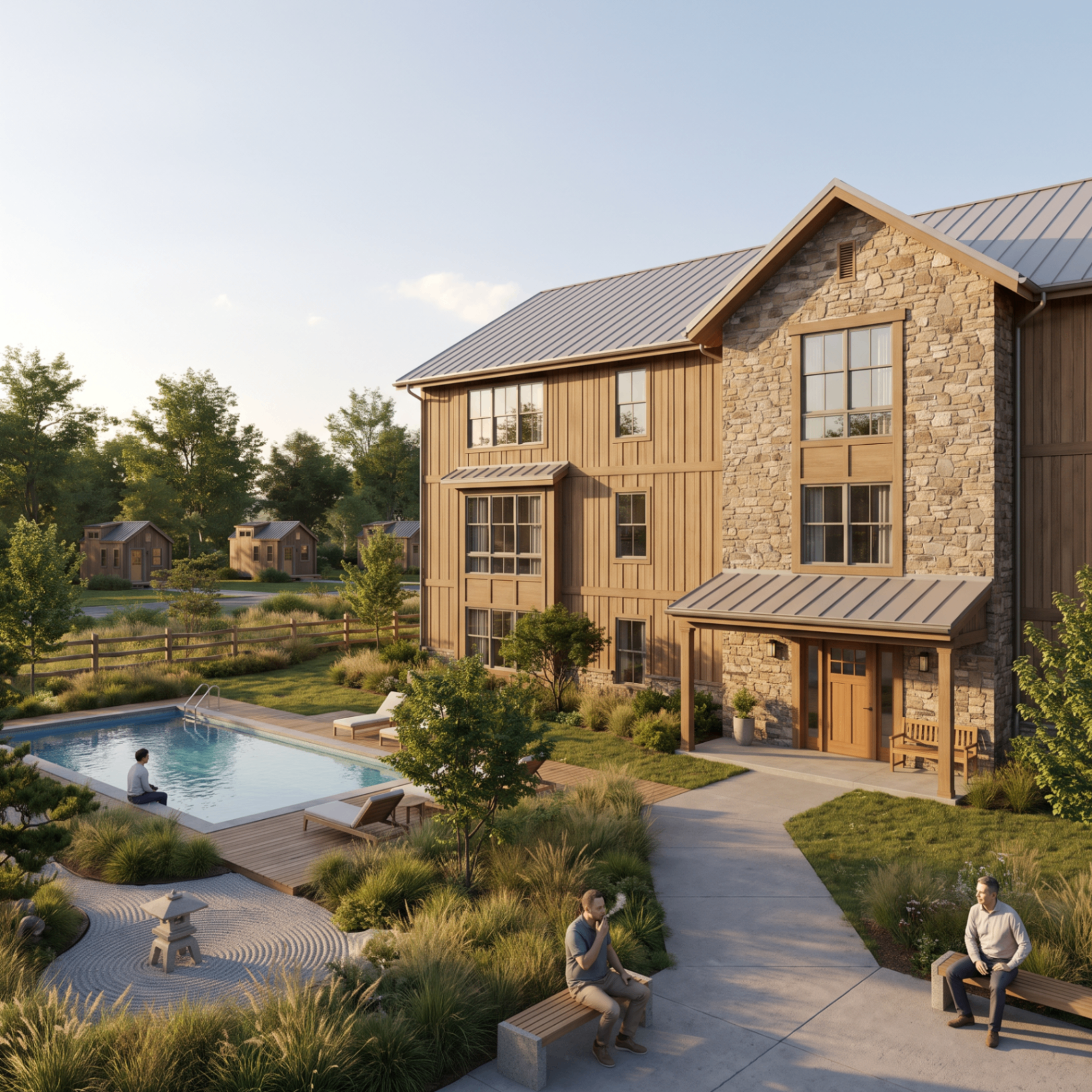
AI-generated concept rendering — illustrative only, not an architectural plan